


Top 5 Ice Machine Problems and Proven Fixes (Complete Maintenance & Troubleshooting Guide)
 Fiber Water Technology
Publishes by Fiber Water Technology April 22 2026
Ice machines are mission-critical assets for restaurants, hotels, hospitals, and commercial kitchens. When performance drops, operations slow, hygiene risks increase, and costs escalate. We present a comprehensive, field-tested guide to the top 5 common ice machine issues and how to solve them, with precise diagnostics, corrective actions, and preventive strategies designed to maximize uptime and ice quality.
1. Ice Machine Not Producing Ice
Symptoms
- No ice production despite power supply
- Unit runs but harvest cycle never completes
- Thin or incomplete ice cubes
Root Causes
- Insufficient water supply or low pressure
- Faulty water inlet valve
- Dirty water filter restricting flow
- Malfunctioning thermostat or control board
Proven Fix
- Verify water supply line is open and pressure is within manufacturer range (20–80 PSI).
- Replace clogged water filters immediately.
- Test the inlet valve for continuity and proper operation.
- Reset or recalibrate the control board if cycle timing is abnormal.
Preventive Strategy
- Replace water filters every 3–6 months
- Install a pressure regulator if supply fluctuates
- Conduct monthly inspections of tubing and valves
2. Ice Cubes Are Too Small or Misshapen
Symptoms
- Hollow or thin cubes
- Irregular shapes or fragmented ice
- Slow ice buildup
Root Causes
- Low water flow or restricted inlet
- Scale buildup on evaporator plates
- Incorrect cube size settings
Proven Fix
- Clean the evaporator with an approved descaling solution.
- Inspect and replace water distribution tubes if blocked.
- Adjust cube thickness control as per manufacturer specifications.
Preventive Strategy
- Use a water softener in hard-water regions
- Schedule quarterly descaling
- Monitor cube size consistency daily
3. Ice Machine Leaking Water
Symptoms
- Water pooling beneath unit
- Dripping from internal components
- Overflow during fill cycle
Root Causes
- Blocked or misaligned drain line
- Cracked water hoses or loose fittings
- Float switch malfunction
Proven Fix
- Clear and reposition the drain line.
- Tighten or replace damaged hoses and connectors.
- Test and replace faulty float switch.
Preventive Strategy
- Inspect drainage weekly
- Avoid kinks in tubing
- Keep drain area clean
4. Ice Tastes Bad or Has Odor
Symptoms
- Metallic or chemical taste
- Unpleasant smell
- Cloudy ice
Root Causes
- Dirty water filters
- Bacterial or mold growth
- Contaminated water supply
Proven Fix
- Replace filters and flush the system.
- Perform full sanitization with food-safe cleaner.
- Clean bin, scoop, and interior surfaces.
Preventive Strategy
- Sanitize every 1–2 months
- Use dedicated ice scoops
- Ensure proper ventilation
5. Ice Machine Freezing Up or Not Cycling Properly
Symptoms
- Ice stuck on evaporator
- Machine stops mid-cycle
- Excess frost buildup
Root Causes
- Faulty thermostat or thermistor
- Refrigerant imbalance
- Dirty condenser coils
Proven Fix
- Clean condenser coils to restore heat exchange efficiency.
- Check refrigerant levels (professional service required).
- Replace defective temperature sensors.
Preventive Strategy
- Clean condenser monthly in dusty environments
- Maintain adequate airflow clearance around unit
- Schedule annual professional servicing
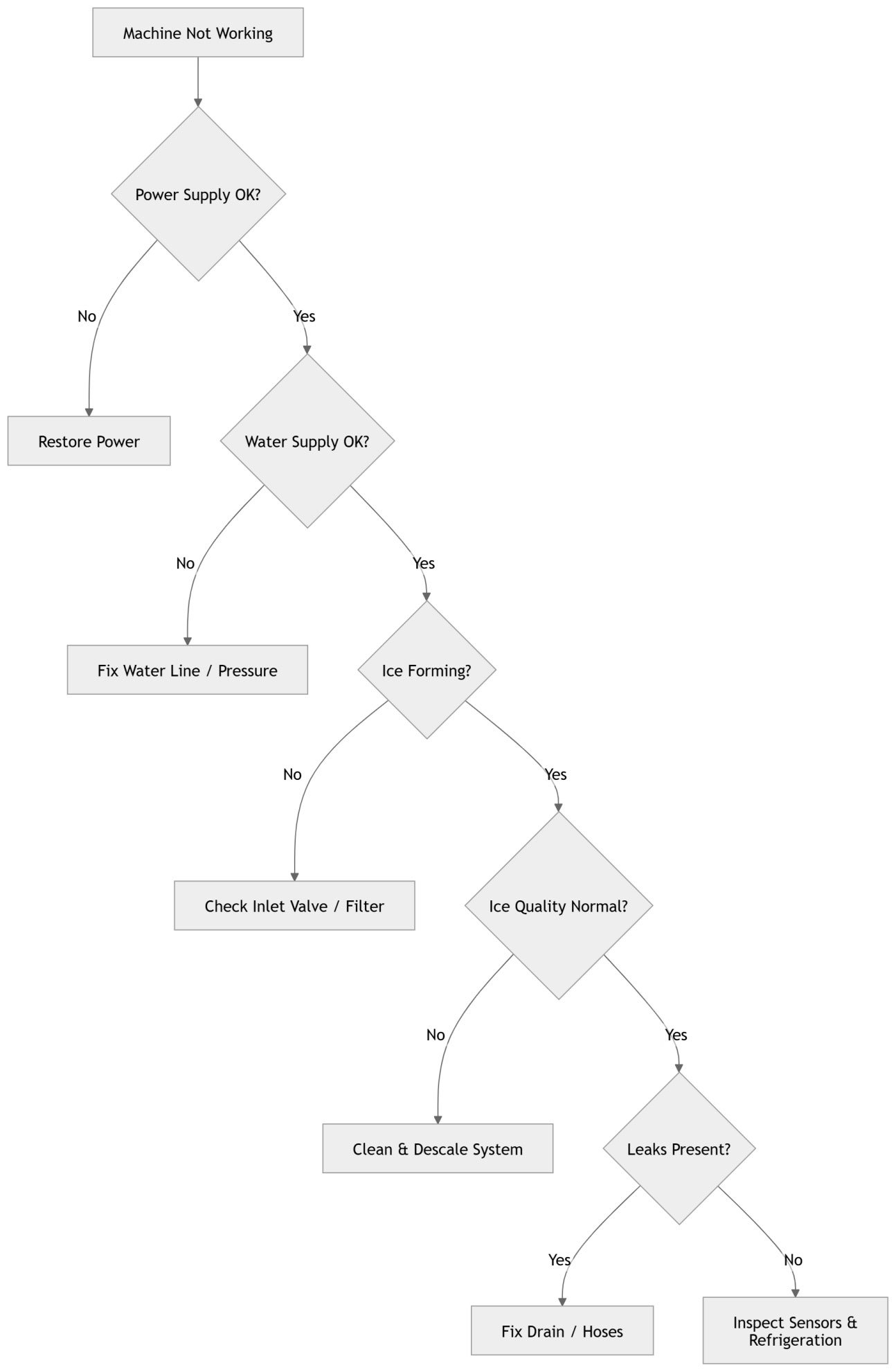
Ice Machine Troubleshooting Flow (Operational Logic)
Advanced Maintenance Checklist for Maximum Performance
Daily
- Inspect ice clarity and shape
- Ensure bin is clean and covered
Weekly
- Check drain lines and tubing
- Wipe external surfaces
Monthly
- Clean condenser coils
- Inspect internal components
Quarterly
- Replace filters
- Descale evaporator
Annually
- Full professional servicing
- Refrigerant system inspection
Expert Recommendations for Long-Term Reliability
- Install high-quality filtration systems to reduce mineral deposits.
- Maintain consistent ambient temperature (10°C–40°C optimal range).
- Avoid overloading storage bins to prevent airflow restriction.
- Use OEM replacement parts for compatibility and durability.
Reliable ice production depends on proactive maintenance and precise troubleshooting. By addressing these five critical issues with structured diagnostics and consistent care, we ensure optimal machine efficiency, superior ice quality, and minimal downtime. Implementing these strategies not only extends equipment lifespan but also protects operational continuity in high-demand environments.
Leave your thought here
Your email address will not be published. Required fields are marked *